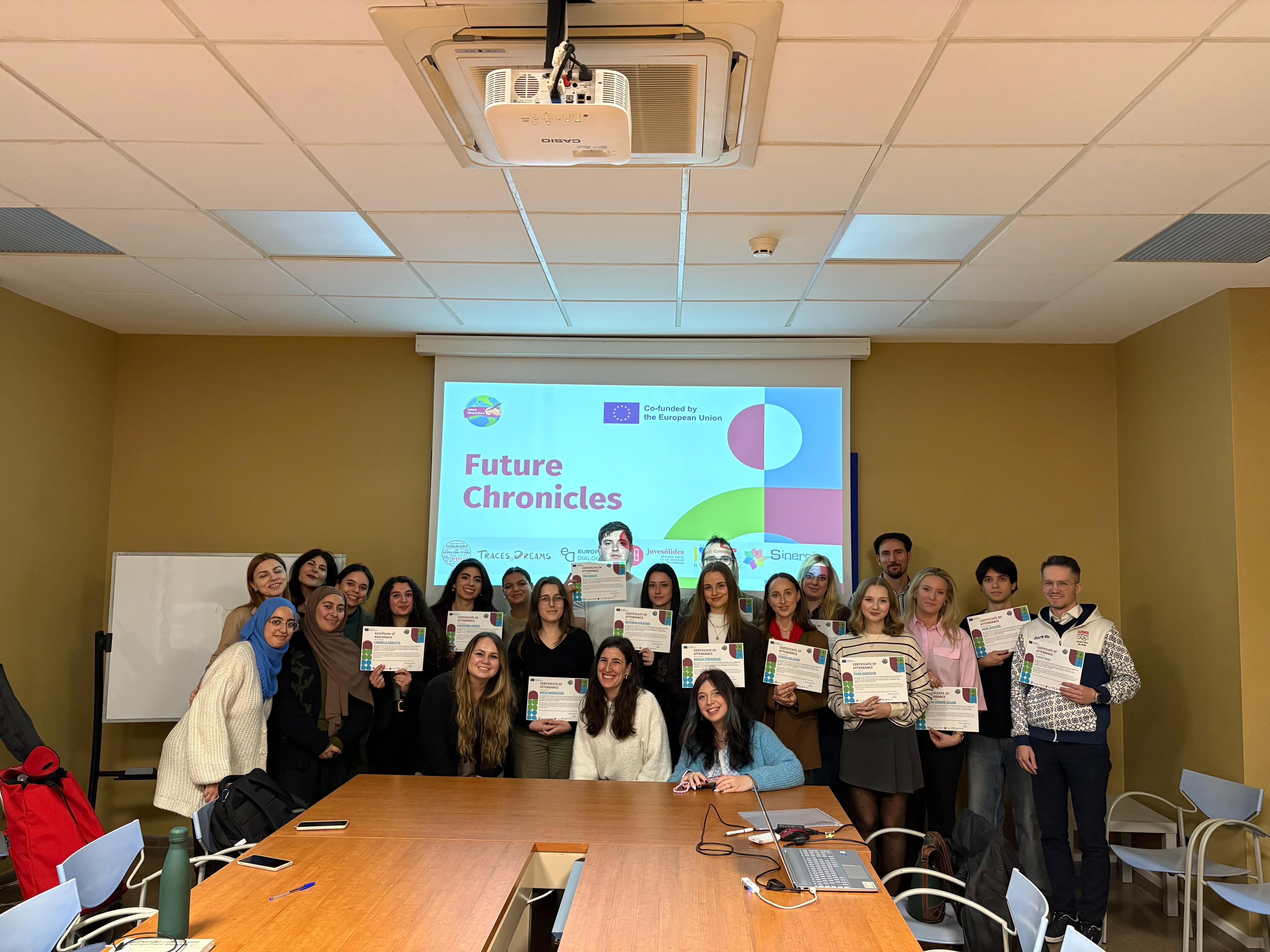
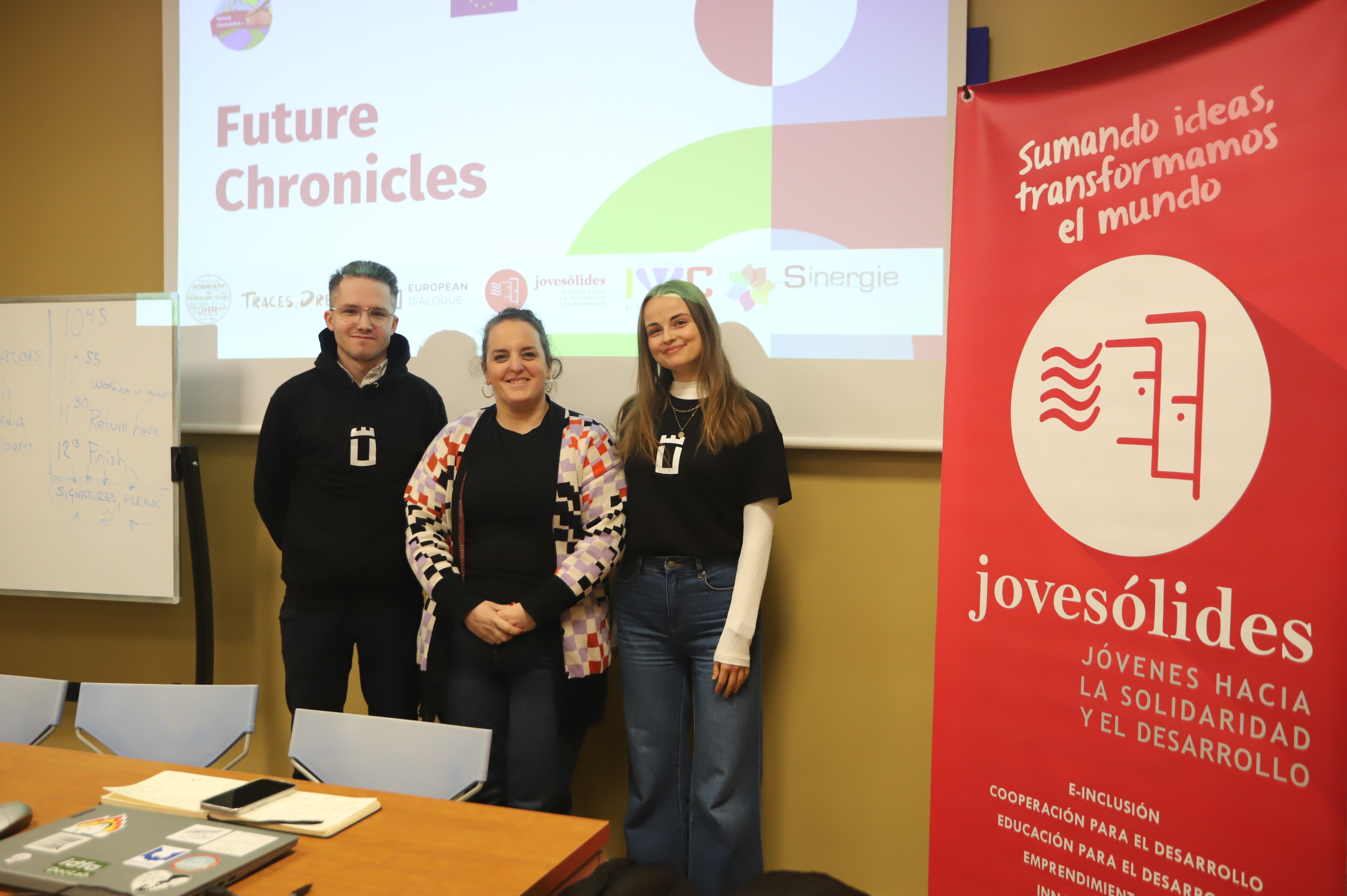
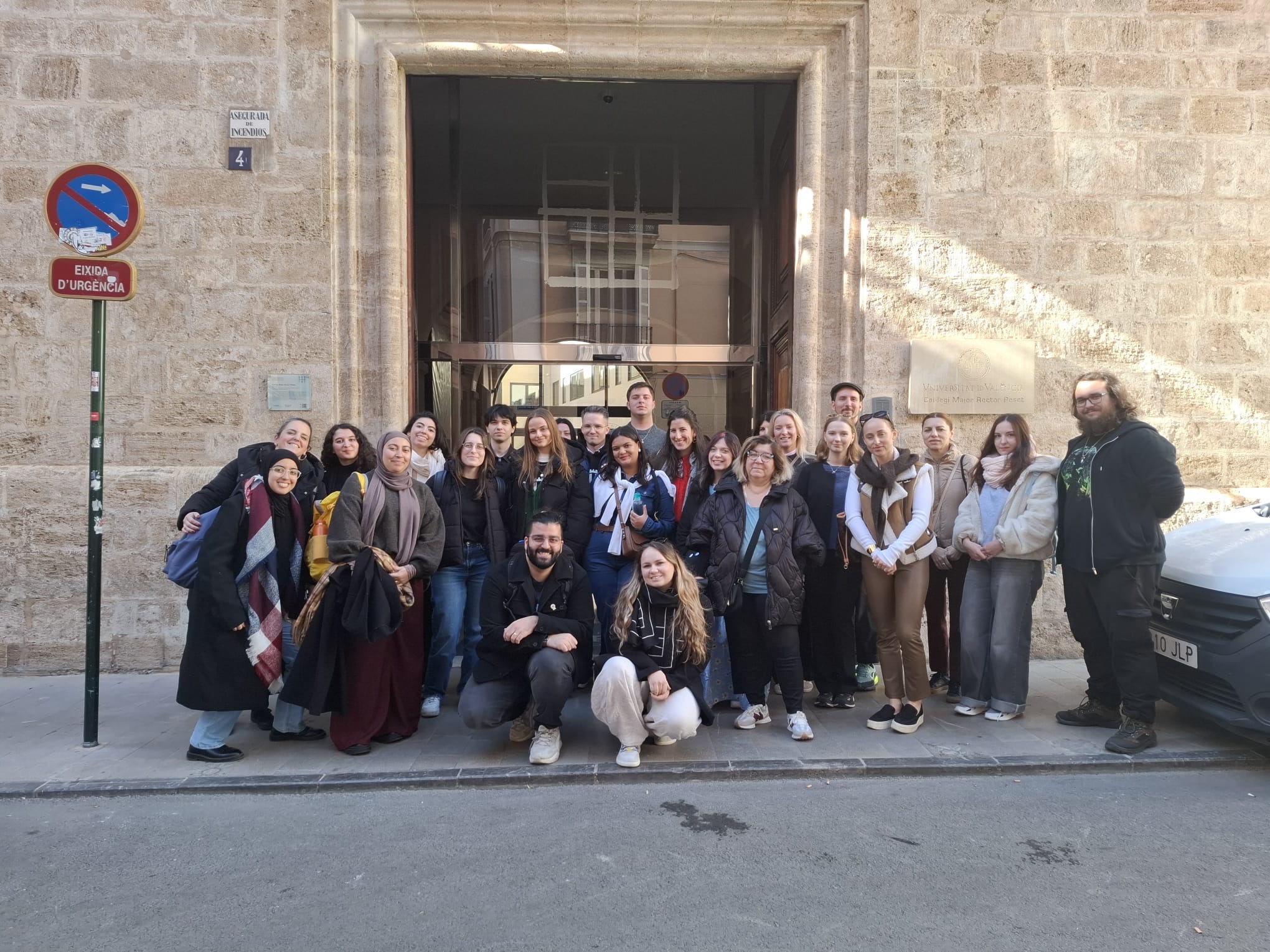
Five days of intensive work, international discussions and topics that touch on the future of society. This is how FMK PhD student Tomáš Tinák describes his time at the Future Chronicles international training in Valencia, where he participated as one of three Slovak representatives.
The participation was prompted by an initiative from the university
Tomáš came across the opportunity of the European Dialogue through the university newsletter Kampus Kompas, which published a call for participation in the Future Chronicles certified course. Meeting the conditions - completion of the modules, active participation and a motivation letter - opened the way for him to be among the applicants, from which the organisers selected Slovak participants.
When he found out that he was one of those selected, it was a powerful moment for him. "I was very pleased. I saw it as a great opportunity and confirmation that the efforts I had put into the course or studying at our university were worthwhile," he says.
In the spotlight: misinformation, stereotypes and artificial intelligence
The main idea behind the training was to equip young people with the tools to spot manipulative techniques and false narratives. There was a strong focus on gendered misinformation, which affects women in particular, and how the media shapes the image of marginalised groups.
It was these topics that interested Tomáš the most. "We discussed how manipulative techniques appear not only in political communication, but also in TV series and films, where they subtly normalise stereotypes," he explains. He adds that discussions about Islamophobia or the portrayal of Muslim communities offered a new framework for how to read the content we consume on a daily basis.
Another very powerful moment for him was a statistic he learned at the training: "Up to 95% of all online deepfakes are pornographic, and 99% of their victims are women." This figure, in his view, clearly shows how quickly AI can deepen already existing forms of discrimination.
A meeting of cultural perspectives
Participants came from Spain, Italy, Sweden, Romania and Northern Macedonia. Despite cultural differences, many of their experiences were similar. Misinformation, stereotyping and polarisation are problems that are gaining momentum across Europe.
The biggest differences emerged on the topic of Islamophobia. Spanish participants described situations that one would not even realise from smaller Central European countries - for example, people refusing to sit next to them on public transport or verbally attacking them because of the way they dressed. On the contrary, Swedes pointed out that although discrimination is less visible in their country, it still exists - just in a different form.
Lessons that can also be applied at home
Tomáš takes away from the training both concrete tools and practical experience that he plans to apply in the creation of workshops or educational activities in Slovakia. These include working with manipulative narratives, analysing gendered misinformation and mapping deepfake techniques.
He has already tried some of the methods in practice. "In April, together with a colleague in Krakow, I conducted a workshop on AI and deepfake manipulations, which had a very positive response," he says. However, after his experience in Valencia, he feels even more strongly the need to emphasise the dimension of protecting women's dignity.
Advice for future participants
Tomas encourages anyone considering a similar experience, "I would definitely recommend going all in. This kind of training is not just about knowledge, but especially about meeting people from different countries who bring their own stories and perspectives."
Being open to discussion, asking questions and being prepared to confront one's own ideas are also part of what makes programmes like this special, he says.